

Introduction
The Gogen puzzle is an engaging word-based logic game that challenges players to arrange letters in a grid by using logical reasoning rather than guessing. Unlike traditional crossword puzzles or word searches, Gogen combines vocabulary skills with deductive thinking, making it a favorite among puzzle enthusiasts, students, and anyone looking to sharpen their minds.
Whether you are a complete beginner or someone who has solved many logic puzzles, learning the strategies behind a Gogen puzzle can significantly improve your success rate. The puzzle rewards careful observation, patience, and systematic thinking. Every clue contributes to finding the correct arrangement of letters, and each solved section brings you closer to completing the entire grid.
In this comprehensive guide, you’ll learn everything about Gogen puzzles, including how they work, their rules, solving techniques, common mistakes, educational benefits, and tips for becoming an expert solver.
What Is a Gogen Puzzle?
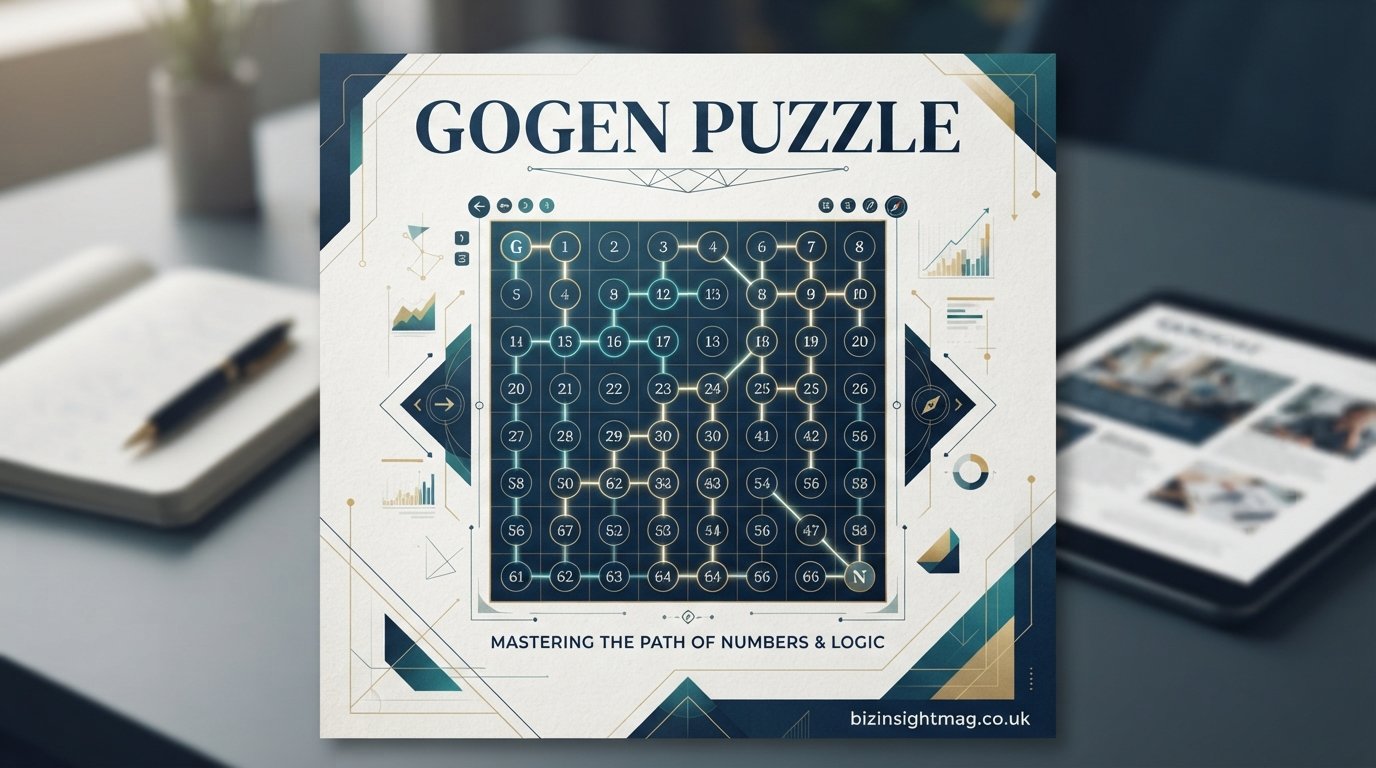
A Gogen puzzle is a word puzzle played on a 5×5 grid containing the letters of the alphabet except one letter, which is usually omitted because only 25 spaces are available. The objective is to place each letter in the correct square while following a list of word clues.
The unique feature of a Gogen puzzle is that adjacent letters in every clue word must also be adjacent within the grid. Adjacency includes horizontal, vertical, and diagonal directions.
For example, if a clue word is GAME, then:
- G must touch A.
- A must touch M.
- M must touch E.
These relationships allow players to gradually determine where every letter belongs.
Unlike puzzles that rely on broad vocabulary knowledge, success in Gogen depends largely on logical deduction.
The History of the Gogen Puzzle
The exact origins of the Gogen puzzle are difficult to trace, but it became popular through puzzle books and newspaper puzzle sections during the late twentieth century. Puzzle creators wanted to develop games that combined elements of logic with word recognition.
Since then, Gogen has appeared in:
- Puzzle magazines
- Educational workbooks
- Mobile puzzle apps
- Online puzzle websites
- Daily newspaper puzzle pages
Its popularity continues to grow because it provides a refreshing alternative to Sudoku, crosswords, and word searches.
How Does a Gogen Puzzle Work?
Every Gogen puzzle starts with a partially completed letter grid. Some letters are already placed to help players begin solving.
Alongside the grid is a list of clue words.
Each clue word follows one simple rule:
Every pair of consecutive letters in the word must be located in neighboring squares.
Neighboring means:
- Left
- Right
- Above
- Below
- Any diagonal direction
This creates a network of relationships that gradually reveals where every letter belongs.
For example, if several clue words contain the letter R connected to different letters, the possible position of R becomes increasingly restricted.
Eventually, only one valid arrangement remains.
Basic Rules of a Gogen Puzzle
Understanding the rules makes solving much easier.
Every Letter Appears Once
Each letter may only occupy one square in the grid.
No duplicates exist.
Consecutive Letters Must Touch
If two letters appear next to each other in a clue word, they must also touch within the completed grid.
Touching includes diagonal contact.
Fixed Letters Cannot Move
Many puzzles provide several letters already placed.
These positions are permanent.
Every Clue Must Work
The completed grid must satisfy every clue word.
Even if one word fails, the puzzle is incorrect.
Understanding the Grid Layout
The traditional Gogen grid consists of:
- 25 squares
- One letter per square
- Usually omits the letter Q (or occasionally another letter)
Because only 25 letters fit inside the grid, one alphabet letter is excluded.
The omitted letter is normally announced before solving begins.
Some modern puzzle versions include slightly modified rules, but the classic format remains the most common.
Step-by-Step Guide to Solving a Gogen Puzzle
Learning a structured approach greatly increases your chances of success.
Step 1: Examine the Given Letters
Start by studying every fixed letter.
Notice which clue words include these letters.
These positions provide your strongest starting points.
Step 2: Find Common Letters
Letters appearing in many clue words become extremely valuable.
For example:
- E
- R
- S
- T
- A
These letters connect many words together.
The more connections a letter has, the easier it becomes to narrow its location.
Step 3: Draw Possible Connections
Imagine every neighboring square around a known letter.
Ask:
Where could the next letter reasonably fit?
Eliminate impossible positions.
Step 4: Use Elimination
Suppose letter D can only occupy three squares.
If two become impossible because of another clue, only one remains.
Logical elimination is the heart of Gogen solving.
Step 5: Revisit Earlier Assumptions
Each newly placed letter affects several clue words.
Return frequently to previously uncertain areas.
Fresh information often unlocks difficult sections.
Best Strategies for Beginners
New players often struggle because they try to solve randomly.
Instead, use these proven methods.
Start with Short Words
Three-letter words provide fewer possibilities.
They often reveal important placements early.
Look for Repeated Patterns
Many puzzles reuse common endings like:
- ING
- EST
- ER
- ED
These repeated sequences create helpful connections.
Focus on Highly Connected Letters
Letters appearing in multiple clue words become anchors.
Build around them.
Avoid Guessing
Guessing usually creates contradictions later.
Instead, wait until logic leaves only one possibility.
Advanced Solving Techniques
Experienced players use additional strategies.
Chain Deduction
One solved letter often determines several others.
Those letters then determine even more.
This creates a logical chain reaction.
Constraint Mapping
Experts mentally track where each letter can and cannot appear.
As options shrink, the correct answer becomes obvious.
Cross-Referencing Words
Every clue supports the others.
Rather than solving one word independently, compare overlapping letters across several clues.
This dramatically improves accuracy.
Common Mistakes to Avoid
Many beginners repeat the same errors.
Guessing Too Early
Incorrect assumptions spread throughout the puzzle.
Later corrections become difficult.
Ignoring Diagonal Adjacency
Many new players forget that diagonal squares count as touching.
This leads to false eliminations.
Forgetting Existing Clues
Each clue matters equally.
Never solve one word while ignoring another.
Overlooking Fixed Letters
The provided letters form the puzzle’s foundation.
Always build around them first.
Why Gogen Puzzles Improve Brain Function
Regular puzzle solving exercises multiple cognitive abilities.
These include:
Logical Reasoning
Every placement depends on deduction.
This strengthens analytical thinking.
Pattern Recognition
Players learn to identify relationships between letters.
Pattern recognition improves with practice.
Memory Improvement
Remembering previous deductions enhances working memory.
Vocabulary Development
Repeated exposure to words naturally expands vocabulary.
Concentration
Completing a puzzle requires sustained focus.
This improves attention span over time.
Educational Benefits for Students
Teachers increasingly use logic puzzles in classrooms.
Gogen offers numerous learning benefits.
Students develop:
- Better spelling
- Improved reasoning
- Stronger vocabulary
- Enhanced concentration
- Critical thinking skills
- Problem-solving confidence
Unlike memorization exercises, Gogen encourages active learning.
Students discover answers independently through reasoning.
Gogen Puzzle vs Other Word Games
Many people compare Gogen with other popular puzzles.
Gogen vs Crossword
Crosswords emphasize definitions and vocabulary.
Gogen emphasizes logic.
Gogen vs Sudoku
Sudoku uses numbers.
Gogen uses letters.
Both reward deduction rather than guessing.
Gogen vs Word Search
Word searches require finding hidden words.
Gogen requires constructing the entire letter arrangement.
Gogen vs Boggle
Boggle focuses on creating words quickly.
Gogen focuses on logical placement.
Tips for Solving Difficult Gogen Puzzles
Some puzzles become surprisingly challenging.
These tips help during difficult moments.
Take short breaks.
Fresh eyes often notice overlooked patterns.
Review every clue again.
Small details frequently unlock entire sections.
Avoid rushing.
Accuracy always beats speed.
Double-check every completed word.
One incorrect letter affects multiple clues.
Can Children Play Gogen Puzzles?
Absolutely.
Many beginner-level puzzles are designed specifically for children.
Young players learn:
- Letter recognition
- Word construction
- Logical thinking
- Patience
- Attention to detail
Parents often use Gogen as an enjoyable educational activity that feels more like a game than homework.
Digital Gogen Puzzle Apps
Modern technology has introduced Gogen to mobile devices.
Many puzzle apps include:
- Daily challenges
- Timed games
- Hint systems
- Progress tracking
- Multiple difficulty levels
Online versions also allow players to solve puzzles anywhere without printing worksheets.
Printable Gogen Puzzles
Many puzzle lovers still prefer printed puzzles.
Printable versions allow:
- Pencil solving
- Annotation
- Classroom activities
- Offline entertainment
- Family puzzle sessions
Teachers frequently print beginner puzzles for vocabulary lessons.
Competitive Puzzle Solving
Although Gogen is usually played casually, many puzzle enthusiasts enjoy timed solving challenges.
Competitions often emphasize:
- Accuracy
- Speed
- Logical efficiency
Practicing regularly helps players improve both confidence and completion time.
How to Create Your Own Gogen Puzzle
Creating a Gogen puzzle can be as rewarding as solving one.
The process generally includes:
Choose a 5×5 grid layout.
Arrange 25 unique letters.
Create interconnected clue words.
Remove most letters while leaving enough clues for a unique solution.
Test the puzzle carefully.
Good puzzle design requires balancing difficulty with solvability.
Daily Practice Tips
Consistent practice produces noticeable improvement.
Try solving:
- One puzzle each morning
- Progressively harder puzzles
- Timed challenges
- Printed and digital versions
Review mistakes afterward.
Understanding why an answer was wrong is one of the fastest ways to improve.
Why Gogen Remains Popular
Despite thousands of puzzle types available today, Gogen remains a favorite because it successfully combines language and logic.
Players enjoy:
- Fair challenges
- No guessing required
- Educational value
- Relaxing gameplay
- Endless replayability
Each puzzle offers a completely new logical journey.
That lasting appeal keeps both beginners and experienced puzzle enthusiasts returning for more.
Frequently Asked Questions
Is a Gogen puzzle difficult?
Difficulty varies. Beginner puzzles are quite approachable, while advanced puzzles require careful logical deduction and patience.
Do I need a large vocabulary?
Not necessarily. Most puzzles use common English words, and logical reasoning is more important than advanced vocabulary.
Can I solve a Gogen puzzle without guessing?
Yes. A properly designed Gogen puzzle can be solved entirely through logical deduction.
Are Gogen puzzles suitable for children?
Yes. Many educational editions are created specifically for students and young learners.
How long does it take to solve one?
Simple puzzles may take 10–15 minutes, while complex puzzles can require 30 minutes or more depending on experience.
Conclusion
The Gogen puzzle is far more than a simple word game. It combines logical deduction, vocabulary recognition, and strategic thinking into a rewarding mental exercise suitable for all ages. Whether you solve puzzles for relaxation, education, or intellectual challenge, Gogen offers countless opportunities to improve your reasoning skills while having fun.
As you gain experience, you’ll begin recognizing patterns more quickly, making smarter deductions, and completing puzzles with greater confidence. The key is consistency—every puzzle solved strengthens your ability to think critically and logically. Whether you enjoy printed puzzle books or digital apps, adding Gogen puzzles to your daily routine is an excellent way to keep your mind active, improve concentration, and enjoy one of the most satisfying word logic games available today.
