

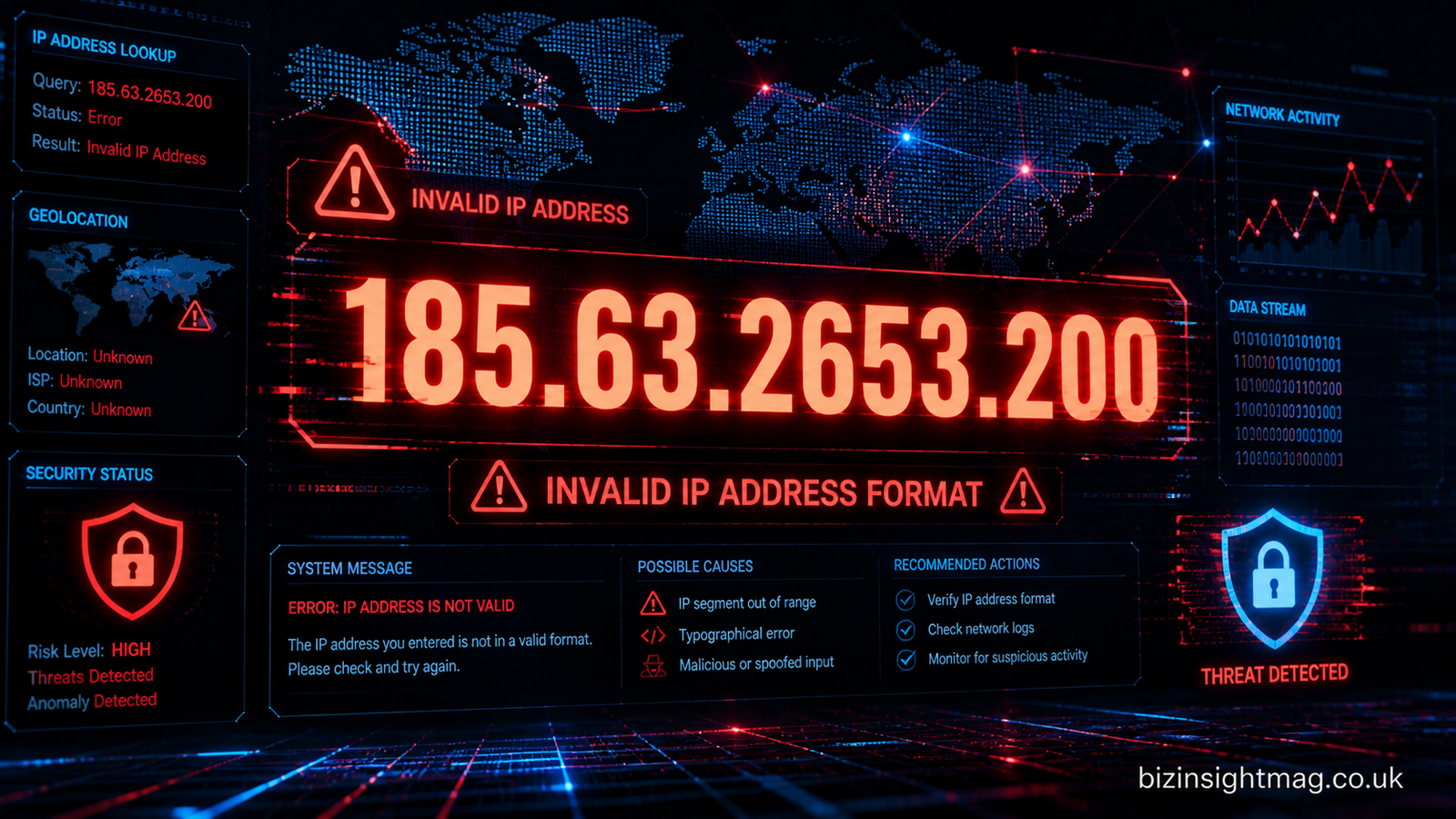
The string “185.63.2653.200” looks like a standard IPv4 address, but it is technically invalid. IPv4 addresses are composed of four numerical segments called octets, and each must fall within the range of 0 to 255. In this case, the third segment “185.63.2653.200” exceeds that limit, which immediately disqualifies the address from being usable on any real network. This means it cannot function as a legitimate IP address for servers, websites, or internet communication.
Despite this, such malformed IP-like strings are often searched online because they resemble real addresses. Many users assume they might lead to hidden servers, private networks, or restricted content. However, from a technical standpoint, this address cannot exist within the global internet infrastructure and has no operational meaning in networking systems.
What Is an IP Address and Why It Is Important
An IP address, or Internet Protocol address, is a unique identifier assigned to devices connected to a network. It allows devices to communicate with each other and ensures that data reaches the correct destination. Every time you visit a website, your device uses an IP address to connect to the server hosting that site.
IP addresses serve two essential roles: identifying the device and providing a location for data routing. Without them, the internet would not be able to function as a global communication system. Whether it is browsing, streaming, or sending emails, IP addresses are always working behind the scenes.
Why 185.63.2653.200 Is Not a Valid IPv4 Address
The invalidity of “185.63.2653.200” comes down to basic IPv4 rules. Each octet must be between 0 and 255, and any value outside that range makes the address unusable. Since “2653” is far beyond the allowed maximum, the address fails standard validation checks used by operating systems and network devices.
When such an address is entered into a browser, server configuration, or network tool, it will either return an error or be ignored. Systems are designed to reject malformed IP addresses to prevent misrouting and ensure stability across networks. This validation is a core part of how internet protocols maintain reliability.
Common Reasons People Search for Invalid IPs
Invalid IP addresses like “185.63.2653.200” often gain attention due to viral trends, online myths, or misleading content. Social media platforms and forums sometimes share these strings as supposed shortcuts to exclusive or hidden websites. This creates curiosity and encourages users to search for them.
In many cases, these searches are driven by misunderstanding rather than technical knowledge. People assume that entering an IP address directly into a browser will bypass restrictions or reveal secret content. However, if the address is not valid, it cannot connect to any server, making such claims inaccurate.
How Malformed IP Addresses Appear Online
Malformed IP addresses can appear in different contexts, including system logs, spam messages, or user-generated content. Sometimes they are the result of simple typing errors, where a user accidentally enters an extra digit or incorrect number. In other cases, automated scripts generate random IP-like strings during testing or scanning activities.
These addresses may also be intentionally created to confuse users or bypass filters. By altering the format slightly, malicious actors can make the string look legitimate while avoiding detection by basic validation systems. This technique is often used in phishing campaigns and misleading advertisements.
Security Risks Associated with Suspicious IP Strings
Although “185.63.2653.200” itself is harmless, the environment in which it is shared can pose risks. Websites or links promoting such IPs may lead to unsafe platforms that attempt to exploit users. These sites can host malware, phishing pages, or deceptive downloads designed to steal personal information.
Cybersecurity experts emphasize the importance of caution when dealing with unfamiliar IP addresses. Even if the address is invalid, clicking on related links or visiting associated websites can expose users to threats. Maintaining strong security practices is essential in preventing these risks.
How to Check if an IP Address Is Real
Verifying an IP address is relatively simple once you understand its structure. A valid IPv4 address must contain four octets separated by dots, with each number between 0 and 255. Any deviation from this format indicates that the address is invalid.
Online IP lookup tools can also help confirm whether an address exists. These tools query global databases to provide information such as location, ISP, and network ownership. If no data is returned, it is a strong indication that the address is not legitimate.
The Role of IP Lookup Tools in Network Analysis
IP lookup tools play a crucial role in network management, cybersecurity, and troubleshooting. They allow users to gather detailed information about an IP address, including its geographic location, service provider, and associated network infrastructure.
These tools are widely used by IT professionals to investigate suspicious activity, monitor traffic, and ensure proper network configuration. However, they only work with valid IP addresses. When an invalid address like “185.63.2653.200” is entered, the tools cannot return meaningful results because the address does not exist in any registry.
Best Practices for Safe Internet Usage
Understanding IP addresses and how they work is an important part of staying safe online. Users should avoid interacting with unknown or suspicious IP strings, especially those shared without context. It is always better to rely on verified sources and trusted websites when browsing the internet.
Keeping your system updated, using antivirus software, and enabling browser security features can significantly reduce risks. Awareness is key, as many online threats rely on curiosity and misinformation to target users. By recognizing invalid IP patterns, users can avoid unnecessary exposure to harmful content.
Final Thoughts on 185.63.2653.200
The keyword “185.63.2653.200” highlights how easily confusion can arise from something that appears technical but is fundamentally incorrect. While it looks like a real IP address, it does not meet the requirements of IPv4 formatting and cannot function in any network.
Learning to identify valid and invalid IP addresses is a valuable skill in today’s digital world. It not only improves technical understanding but also helps users make safer decisions online. By focusing on accurate information and avoiding misleading trends, users can navigate the internet with greater confidence and security.
