

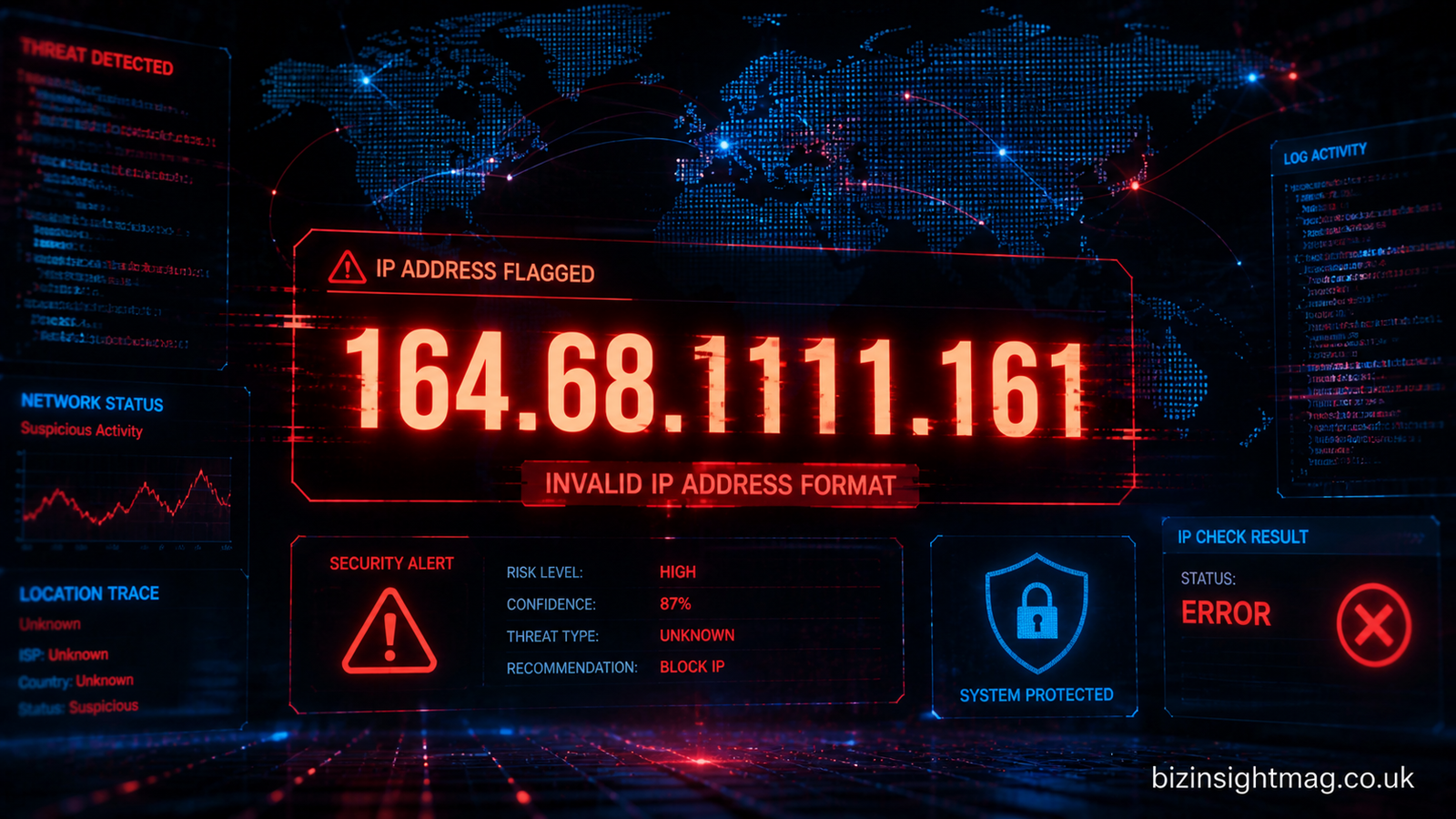
The string “164.68.1111.161” appears to resemble a standard IPv4 address, but it fails a fundamental rule of internet protocol formatting. An IPv4 address consists of four numerical segments, known as octets, each ranging from 0 to 255. In this case, the third octet “1111” clearly exceeds the allowed range, making the address invalid and unusable in real-world networking environments.
Because of this structural error, “164.68.1111.161” cannot exist as a routable or assigned IP address. It cannot be registered to any Internet Service Provider, mapped to a geographic location, or used for hosting servers. Despite its invalidity, similar malformed IP-like strings often circulate online, leading to confusion among users who assume they are legitimate.
What Is an IP Address and Why It Matters
An IP address, or Internet Protocol address, is a unique numerical identifier assigned to each device connected to a network. It plays a critical role in enabling communication between devices, allowing data to travel from one point to another across the internet. Without IP addresses, modern internet functionality would not be possible.
These addresses serve two main purposes: identifying the host or device and providing location addressing for data routing. When you access a website, your device sends a request to a server using its IP address, and the server responds accordingly. This process happens instantly and continuously during everyday internet usage.
Why 164.68.1111.161 Is Technically Invalid
The invalidity of “164.68.1111.161” stems from the strict rules governing IPv4 formatting. Each octet must fall within the 0–255 range, and any number outside this range immediately disqualifies the address. The value “1111” is far beyond this limit, making the address syntactically incorrect.
When systems encounter such malformed addresses, they reject them outright. Networking protocols are designed to validate IP formats before processing them, ensuring that only legitimate addresses are used in communication. This prevents errors, misrouting, and potential security issues.
Common Reasons Behind Searches for Invalid IP Addresses
Search queries for strings like “164.68.1111.161” are often driven by curiosity, misinformation, or viral trends. Many users encounter such numbers through social media posts, forums, or messaging apps that claim these addresses lead to hidden websites or exclusive content.
In reality, these claims are usually unfounded. Invalid IP addresses cannot connect to servers or host any form of content. However, their mysterious appearance often sparks interest, leading users to search for explanations or attempt to access them through browsers or network tools.
How Invalid IP Strings Appear in Real Scenarios
Malformed IP addresses can appear in various technical and non-technical contexts. In some cases, they result from simple human error, such as typing mistakes during configuration or data entry. Developers and network administrators may accidentally input incorrect values, leading to invalid addresses in logs or systems.
In other cases, automated bots or scripts generate random IP-like strings while scanning networks or testing vulnerabilities. These strings may not always follow valid formatting rules, but they still appear in system logs or analytics tools, creating confusion for those reviewing the data.
Security Concerns Linked to Suspicious IP Queries
While the string “164.68.1111.161” itself is harmless, the environments where it appears can pose risks. Websites or platforms promoting such invalid IPs may host misleading or malicious content. Users who follow links associated with these strings could be exposed to phishing attempts, malware downloads, or deceptive advertisements.
Cybersecurity experts recommend caution when dealing with unfamiliar IP addresses or unusual numeric patterns. Even if the address is invalid, the surrounding context may not be safe. Practicing safe browsing habits and avoiding unverified sources is essential for protecting personal data and devices.
How to Identify a Valid IPv4 Address
Recognizing a valid IPv4 address is straightforward once you understand the basic structure. A proper IPv4 address consists of four octets separated by dots, with each octet ranging from 0 to 255. Any deviation from this format, such as numbers exceeding the range or missing segments, indicates an invalid address.
Validation tools and network utilities can help confirm whether an IP address is correctly formatted. These tools check both the structure and the numerical limits of each segment, ensuring that the address meets official standards before it is used in networking operations.
The Role of IP Lookup Tools in Verification
IP lookup tools are widely used to gather information about valid IP addresses. These tools can provide details such as geographic location, Internet Service Provider, and network ownership. They rely on global databases maintained by regional internet registries and other authoritative sources.
However, when an invalid IP like “164.68.1111.161” is entered into these tools, no meaningful results are returned. This is because the address does not exist within any recognized IP range. The absence of data is a clear indicator that the address is not legitimate.
Best Practices for Safe and Informed Internet Use
Understanding how IP addresses work is an important part of digital literacy. Users should be cautious when encountering unfamiliar IP-like strings, especially those shared without context or verification. Avoid attempting to access such addresses directly, as they may be associated with unsafe or misleading content.
Keeping software updated, using trusted security tools, and relying on verified information sources are key practices for staying safe online. Awareness and education are the first lines of defense against potential threats, particularly in an environment where misinformation spreads quickly.
Final Thoughts on 164.68.1111.161
The case of “164.68.1111.161” highlights the importance of understanding basic networking principles. While it may look like a legitimate IP address at first glance, it fails to meet the essential criteria required for IPv4 formatting. As a result, it cannot function within any real network or system.
By learning how to identify valid IP addresses and recognizing common misconceptions, users can navigate the internet more confidently. In an increasingly connected world, having a clear understanding of these fundamentals not only improves technical awareness but also enhances online safety and decision-making.
